
No products
Prices are tax included
Product successfully added to your shopping cart
There are 0 items in your cart. There is 1 item in your cart.
Archéologie et Histoire Romaine
- Archéologie et Histoire Romaine
- Archéologie Moderne et Contemporaine
- Archéologie des Plantes et des Animaux
- Archéologie du Paysage
- Archives & Histoire de l'Archéologie
- Europe Médiévale
- Monographies Instrumentum
- Préhistoires
- Protohistoire européenne
- Research Protocols
- Off collections
- Résonances
- Les cahiers de saint-michel de Cuxa
- Second-hand
 View larger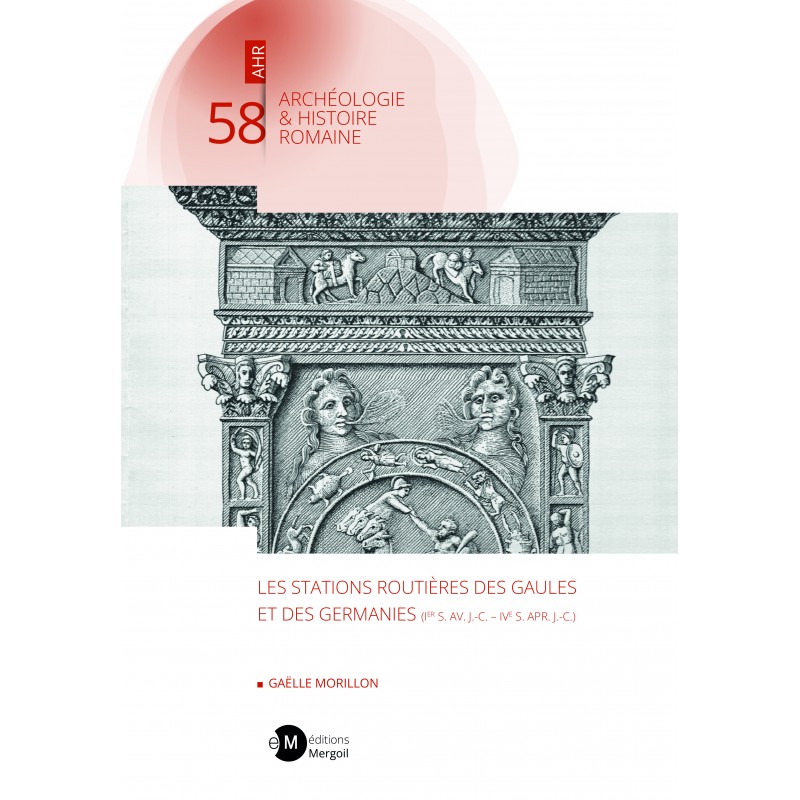
Les stations routières des gaules et des germanies (Ier s. av. j.-c. - IVe s. apr.j.-C.)
AHR-58
New
Les stations routières des gaules et des germanies (Iᵉʳ s. av. J.-C. - IVᵉ s. apr. J.-C.)
Gaëlle Morillon
Edition Details
- Layout and Graphic Design: Gaëlle Morillon
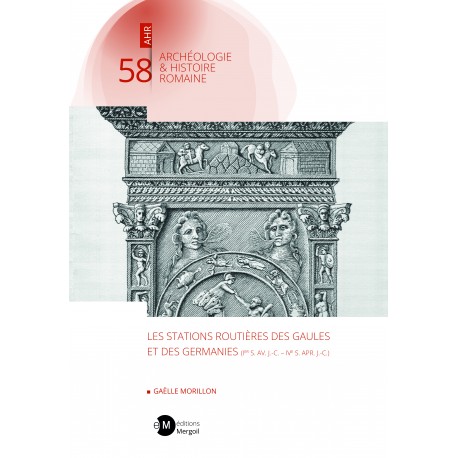
- Cover: Scan du supplément de Trierer Zeitschrift 31/1968 relatif à l’article de E. Zahn : Le nouveau dessin de reconstitution de la colonne d’Igel
- Printer : Aquiprint
- ISBN : 978-2-35518-160-3
- Legal Deposit : février 2026
- Language: French
Book Specifications
- Year : 2026
- Number of Pages : 381 pages dont coul.
More info
Content
This publication derives from a doctoral dissertation defended in 2023 at Université Lumière Lyon 2. It examines various types of Roman road stations that were established, occupied, modified, and transformed between the 1st century BC and the 4th century AD in Gaul and the Germanic provinces. Conducted for the first time on a large scale, this study focuses more specifically on the architectural and functional characterization of these roadside establishments, which have been primarily approached in historiography through textual and cartographic sources such as ancient itineraries. Unlike urban inns, which feature kitchens, drinking establishments, collective dining areas, or series of rooms intended for lodging, road stations fulfilled different purposes. Their connection to the Roman state, through the civil and military vehiculatio service, is well documented in the written sources and perceptible at the scale of the Empire.
The objective here is to establish an architectural typology of road stations that provides the framework for a comparative analysis of their internal layout and organization, in order to clarify their associated functions and modes of occupation, as well as to identify their personnel and users. The catalogue of 36 sites analyses not only the structural remains but also associated assemblages of pottery and artefacts in all categories of material. The implementation of a strict functional classification method allows the establishments to be assessed on a comparable basis, thereby enabling further comparative study.
The identification of certain features pointing to at least a partially official function is made possible through the standardization of their architecture, the diffusion of models across the Empire, and the establishment of precise chronologies. Comparisons with other types of roadside service buildings (postal relay stations, customs posts, beneficiarii stations, military accommodation, etc.) highlight a series of similarities as well as specific characteristics inherent to each type of station.
Summary
Préfaces
Introduction
Première partie – Historique et contexte des recherches
Chapitre 1 – Cadre de l’étude, état des connaissances, problématiques et enjeux de la recherche
I.1.1. Cadre de l’étude
I.1.2. Les stations routières : définitions et historique de la recherche
I.1.3. De l’architecture aux mobiliers
I.1.4. Problématiques et enjeux de la thèse
Chapitre 2 – Méthodologie de la recherche : identification et caractérisation de l’hébergement routier
I.2.1. L’hébergement des hommes
I.2.2. La prise en charge des animaux
I.2.3. Adaptation des modalités d’hébergement collectif au contexte routier
I.3.1. Méthode de recherche
Chapitre 3 – Constitution du corpus de recherche
I.3.2. Sélection des sites
I.3.3. Enregistrement des données
I.3.4. Synthèse des résultats
Deuxième partie – Analyse des sites
Chapitre 1 – Typologie des établissements d’accueil routier
II.1.1. Mise en place de la typologie
II.1.2. Type A : les bâtiments routiers
II.1.3. Type B : les établissements routiers
Chapitre 2 – Les stations routières de type A1
II.2.1. Les stations à cour centrale (A1) : implantation et architecture globale
II.2.2. Prestations associées
II.2.3. Chronologie et répartition spatiale
Chapitre 3 – Les stations routières de type A2
II.3.1. Définition du type
II.3.2. Chronologie et répartition spatiale
II.3.3. Fonctions
Chapitre 4 – Les stations routières de type A3
II.4.1. Définition du type
II.4.2. Prestations associées
II.4.3. Chronologie et répartition spatiale
II.4.4. Fonctions
Chapitre 5 – Les stations routières de type A : première étape de synthèse
II.5.1. Architecture
II.5.2. Des établissements administratifs
II.5.3. Des logements de fonction
II.5.4. Synthèse
Chapitre 6 – Les établissements routiers de type B
II.6.1. Architecture : composition et organisation générale
II.6.2. Les autres composantes des sites de type B
II.6.3. Synthèse : des bâtiments de stockage « hors normes »
Troisième partie – Synthèse des résultats
Chapitre 1 – Chronologie et répartition spatiale
Chapitre 2 – Stations routières (type A) et sources antiques
III.2.1. Les sources antiques : données générales
III.2.2. Les stations à cour simple (A1b) et à plan barlong (A1a)
III.2.3. Stations routières et équipements routiers (types A2 et A3)
Chapitre 3 – Les établissements routiers logistiques (type B)
III.3.1. Entrepôts, administration et fiscalité
III.3.2. Des centres de perception de taxes ?
III.3.3. Des postes douaniers ?
III.3.4. Mode(s) de gestion
Chapitre 4 – Stations routières et hébergement collectif
Conclusion
Quatrième partie – Catalogue des sites
Bibliographie
Download
Customers who bought this product also bought:



30 other products in the same category:
-
Du Rhône...
-
L'Urbanisme...
-

Romanisatio...
-
Les...
-
La Maison...
-
L'Empire...
-
Javols-Ande...
-
Les...
-
Pratiques...
-
Etudier les...
-
Du Rhône...
-
Archéologie...
-
La...
-
L'organisat...
-
Le Clos de...
-
Le centre...
-
Abécédaire...
-
Urbanisme,...
-
Histoires...
-
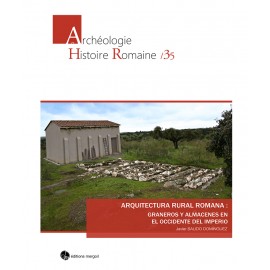
Arquitectur...
-
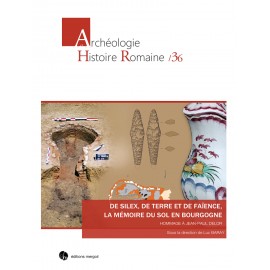
De silex,...
-
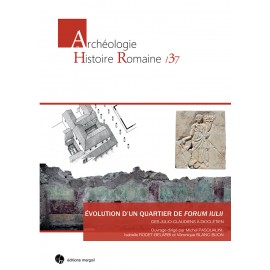
Un quartier...
-

Lugdunum et...
-
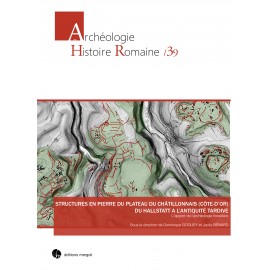
STRUCTURES...
-
LES...
-
La...
-
Archéologie...
-
La forme de...
-
Production...
-
The...