
Cart 0 Product Products (empty)
No products
Free shipping! Shipping
0,00 € Tax
0,00 € Total
Prices are tax included
Product successfully added to your shopping cart
Quantity
Total
There are 0 items in your cart. There is 1 item in your cart.
Total products (tax incl.)
Total shipping (tax incl.) Free shipping!
Tax 0,00 €
Total (tax incl.)
Monographies Instrumentum
- Archéologie et Histoire Romaine
- Archéologie Moderne et Contemporaine
- Archéologie des Plantes et des Animaux
- Archéologie du Paysage
- Archives & Histoire de l'Archéologie
- Europe Médiévale
- Monographies Instrumentum
- Préhistoires
- Protohistoire européenne
- Research Protocols
- Off collections
- Résonances
- Les cahiers de saint-michel de Cuxa
- Second-hand
 View larger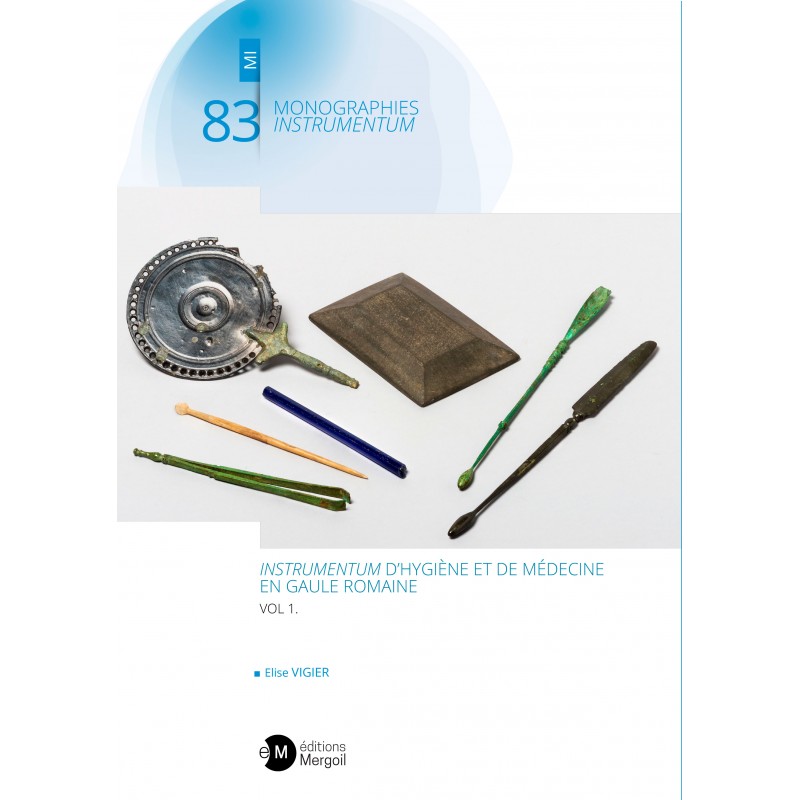
INSTRUMENTUM D’HYGIÈNE ET DE MÉDECINE EN GAULE ROMAINE
MI-83
New
MI-83. INSTRUMENTUM D’HYGIÈNE ET DE MÉDECINE EN GAULE ROMAINE
Elise VIGIER
Edition Details
- Layout and Graphic Design : Elise VIGIER
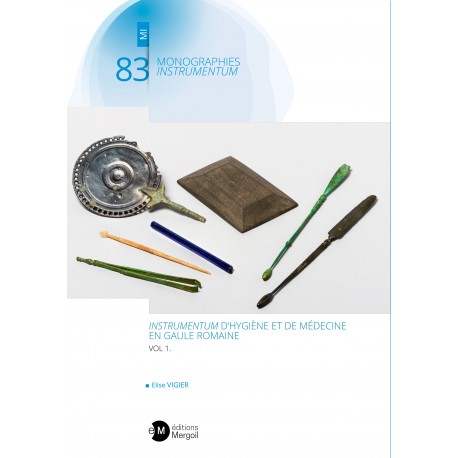
- Cover : Forum antique de Bavay, musée archéologique du Départemet du Nord / Bibracte, cliché Antoine Maillier
- Printer : Aquiprint
- ISBN : 978-2-35518-161-0
- Legal Deposit : mai 2026
- Language : french
Book Specifications
- year : 2026
- Volumes : 3 books. Volumes 1 & 2 are available for purchase; Volume 3 is available for download.
More info
Resume
At the end of the Iron Age, social and economic developments were accelerated by the growing influence of Hellenistic ways of life and thought. Protohistoric cultures, which had long interacted with the Mediterranean world, used razors, nail clippers, and toilet sets, occasionally employed strigils and, exceptionally, mirrors. However, the widespread adoption of these accessories at the beginning of the period covered by this study (Ier century BC) reflects a genuine transformation of society. Far beyond the elites, who nevertheless continued to set the tone for certain practices, the whole of Gallo-Roman society made use of specialised objects for personal care, hygiene, beauty treatment, and medicine. The extraordinary abundance of the available evidence, gathered together here, attests to this success and thus to the importance now accorded to the body and its enhancement. Nearly 8,000 objects from 2,850 archaeological sites, dating between the Ier century BC and the Ve century AD, have been catalogued, described, classified, and analysed in order to understand all dimensions of this new reality. The body existed and therefore required care; it communicated and displayed social status and a way of life. The extreme variety of accessories used certainly complicates any synthetic approach, but it also demonstrates the importance of practices related to the maintenance and preparation of the body, particularly the female body. Following models defined by the patrician class and adopted by the elites, especially in urban settings, interest in the body led to the development not only of cosmetics but also of therapeutic care. Physicians could use many objects of everyday use—probe-spatulas and probe-spoons—which contradicts the long-held belief that specilla were reserved exclusively for professionals. Only surgery seems to have generated its own specialised tools, with no everyday function: scalpels, cataract needles, cranial trephines, and other instruments were indeed tools of specialists and, unlike the former categories, were reserved for a limited segment of the population. This book makes it possible to distinguish precisely, type by type, the uses of the various categories studied. Throughout the volume, readers will discover the surprising abundance of certain series in provinces such as Gallia Belgica, where Hellenistic-Roman influence may have encountered Germanic or insular traditions, helping to explain the success of particular types. The extensive body of evidence examined here is complemented by highly detailed analyses (typological and chronological) for most categories. Just like personal ornaments, instruments related to body care reveal a great deal about the Roman model and the very specific ways in which it was received and interpreted in Gaul.Volume I, 685 p. :
Introduction
État de la recherche
Santé et apparence
Connaissances médicales et moyens thérapeutiques
Objectifs de l’ étude
Aspects méthodologiques
Définition du corpus
Les strigiles métalliques
Les miroirs
Les cuillères-sondes
Les spatules-sondes
Les curettes‑sondes, les sondes doubles et les sondes simples
Les tablettes à broyer
Les scalpels
Conclusion
Bibliographie
Sources anciennes
Corpus
Annexes
Volume II, 617 p. : Catalogue et planches
Volume III, 760 p. : INDEX GÉOGRAPHIQUE ET CONTEXTES ARCHÉOLOGIQUES
(VOL. III téléchargement)
Download
30 other products in the same category:
-

L'Artisanat...
-
Image,...
-
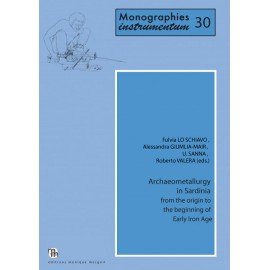
Archaeometa...
-

Lychnologic...
-

Artisanat...
-
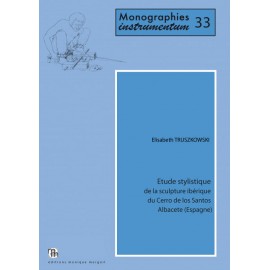
Etude...
-
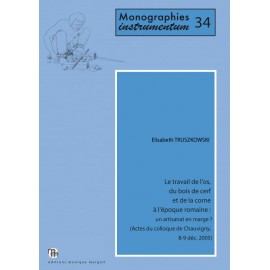
Le travail...
-
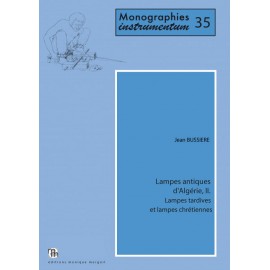
Lampes...
-
Artisanat...
-
Styling the...
-
Dépôts...
-
Luminaire...
-
Meules,...
-

Das...
-
Le Verre en...
-
El...
-
Le...
-
La verrerie...
-

Les...
-
Pistrina...
-

The Roman...
-
Le verre...
-

Actualité...
-
Early Iron...
-
Proceedings...
-
Le verre à...
-
Graffites...
-
LA...
-
BRONZE AGE...
-
Les verres...